AUPCTRE ELECTS EUGENE MANJI AS PRESIDENT AT 7TH QUADRENNIAL CONFERENCE IN KANO, AS AJAERO RAISES WAGE CONCERNS AND BENJAMIN’S EIGHT-YEAR TENURE ENDS WITH CELEBRATION OF LEGACY
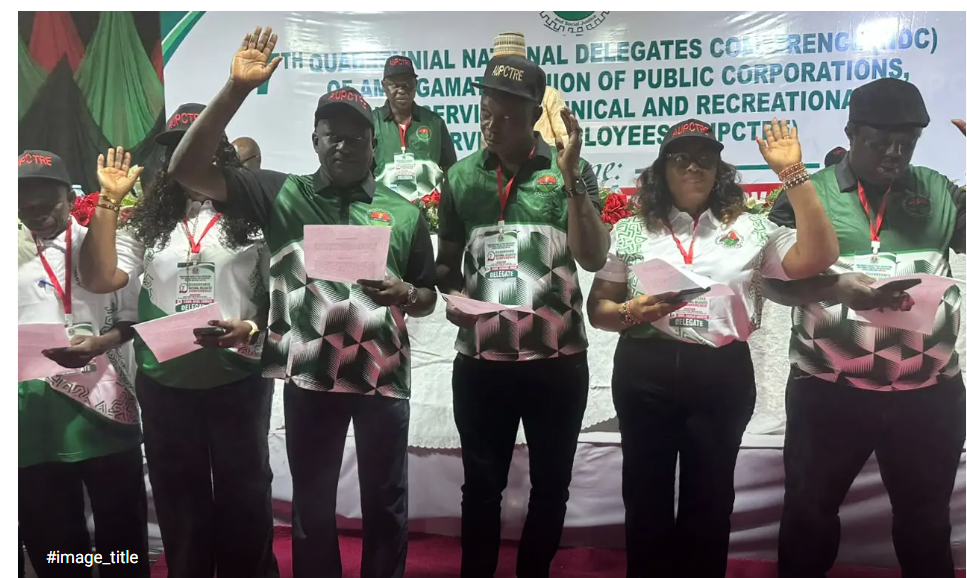
The Amalgamated Union of Public Corporations, Civil Service Technical and Recreational Services Employees (AUPCTRE) has elected Comrade Eugene Manji as its new National President at the Union’s 7th Quadrennial National Delegates Conference in Kano, to lead the Union for a new four-year administration.
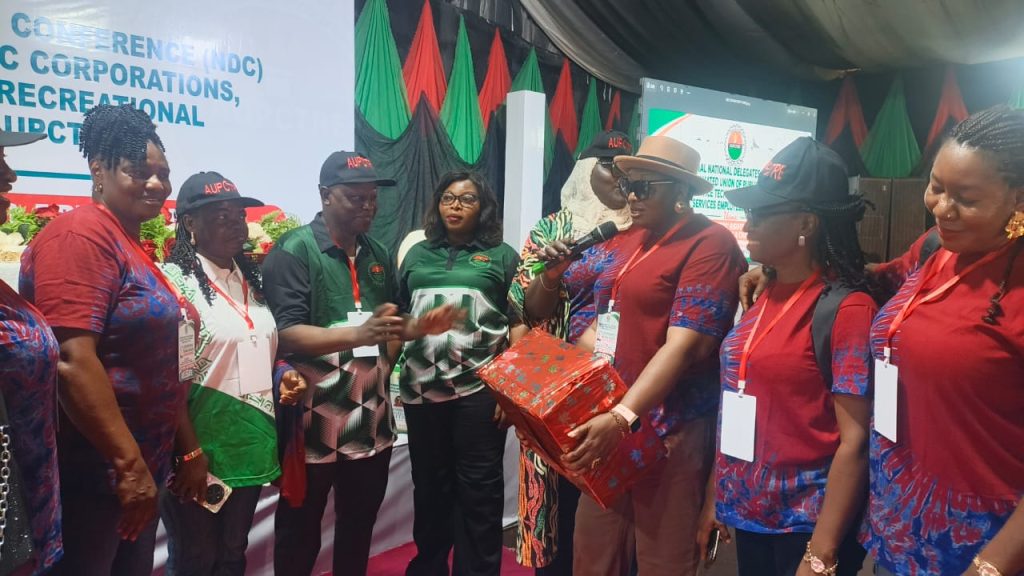
The conference brought together delegates from across the 36 states of the federation and the Federal Capital Territory for a peaceful, orderly, and transparent transition of leadership.
Manji succeeds Comrade Benjamin Anto Uyanto, who served as National President for eight years, from 2017 to 2026. The election was supervised by the Registrar of Trade Unions, representing the Minister of Labour and Employment. The Registrar commended the delegates for the peaceful conduct of the exercise and described the process as worthy of emulation by other Trade Unions.
CONFERENCE OPENS AGAINST BACKDROP OF WORKERS’ WAGE CONCERNS
The leadership transition took place against a wider backdrop of concerns over workers’ purchasing power and the state of wages in Nigeria.
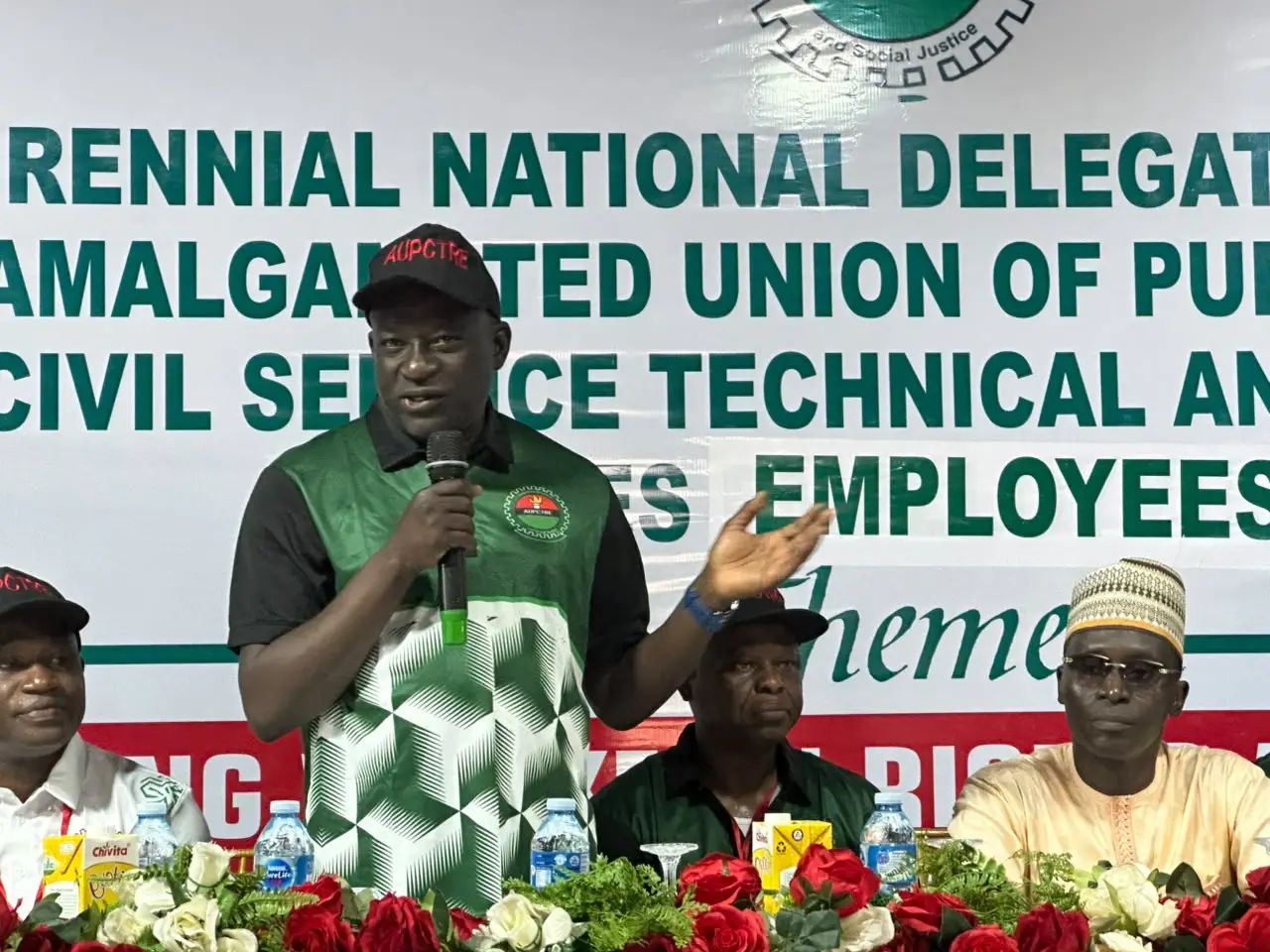
At the opening of the conference, President of the Nigeria Labour Congress (NLC), Comrade Joe Ajaero, called on workers to prepare for another struggle over the national minimum wage.
Ajaero said prevailing economic conditions, particularly the effects of fuel-subsidy removal and the devaluation of the naira, had weakened the purchasing power of workers and placed renewed pressure on the existing wage structure.
He said the labour movement would not be satisfied with an adjustment that merely changed the nominal value of wages without adequately reflecting the cost of living and the dignity of labour.
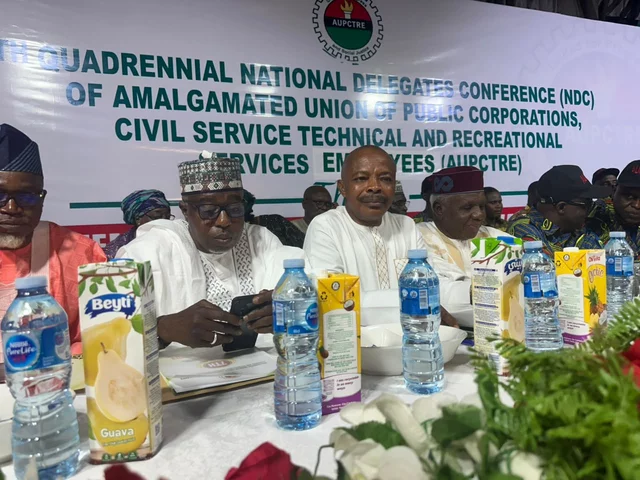
“The adjustment must reflect the true cost of living and the dignity of labour, and AUPCTRE must be at the forefront of this struggle,” Ajaero said.
His remarks provided a broader labour-policy context for the conference, coming as AUPCTRE delegates prepared to elect a new national leadership.
Before the election, accreditation of delegates was conducted and completed digitally at the venue while security personnel were adequately deployed around the venue. Reports from the opening periods described the atmosphere as calm and orderly, with delegates gathered from across the country for the conference and leadership transition.
EUGENE MANJI EMERGES AS NEW AUPCTRE PRESIDENT
Following the conclusion of the conference proceedings, the delegates elected Comrade Eugene Manji as AUPCTRE’s National President.
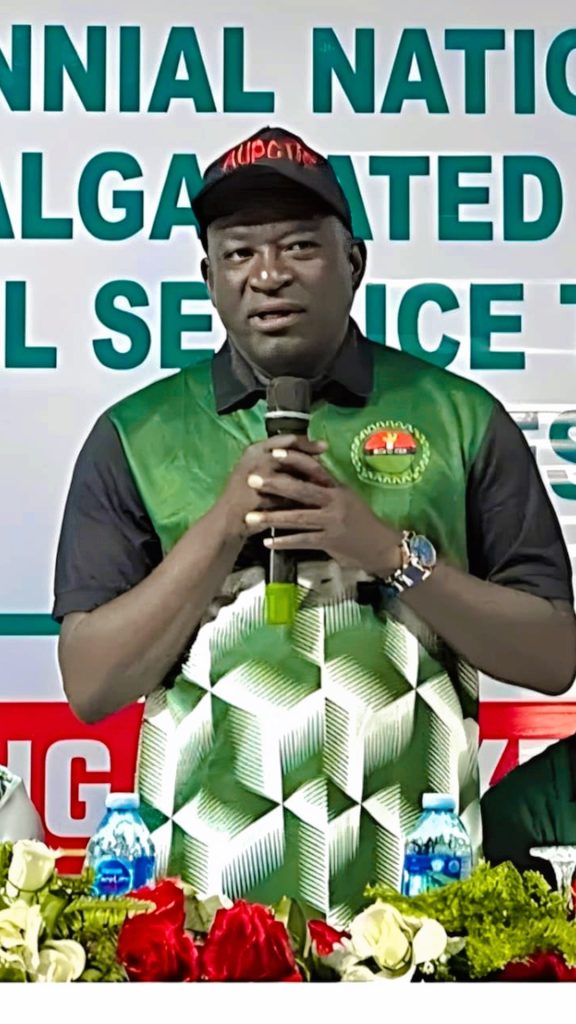
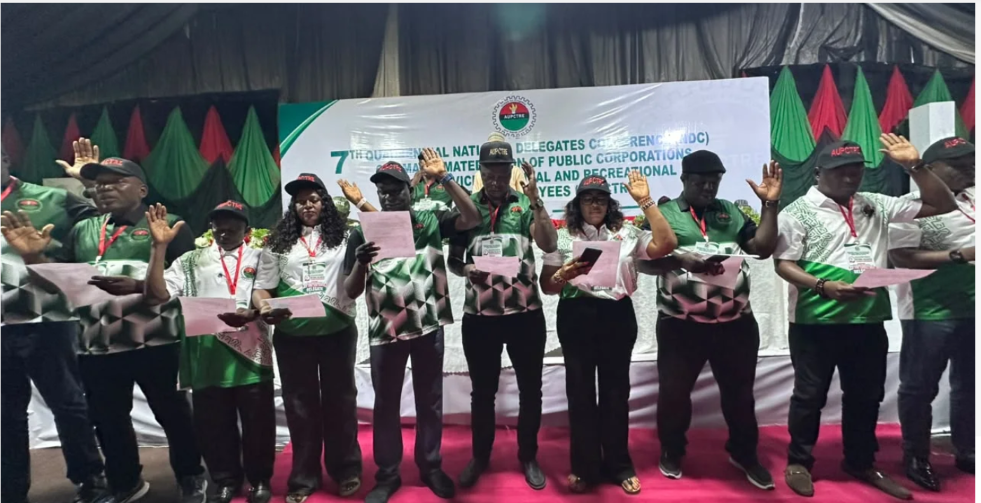
The election also produced a new team of National Executive Officers who will administer the affairs of AUPCTRE henceforth for the next four years.
Elected as National Deputy Presidents were:
- Comrade Uzu Fidelis
- Comrade Ibrahim Kirfi
The National Vice Presidents are:
- Comrade Umaja Aloysius — Central Zone
- Comrade Adoga Abdullahi — Federal Zone
- Comrade Adebayo Adedoyin — Western Zone
- Comrade Joman Bernard — South-South Zone
- Comrade Basil Chibuzor — Eastern Zone
- Comrade Samaila Abdullahi — North-West Zone
- Comrade Moses Helda — North-East Zone
Other elected officers include:
- National Treasurer: Comrade Farotimi Olusoji
- National Secretary Finance: Comrade Rabiu Abdulrahman
- National Auditors: Comrade Rashila Alkali and Comrade Nnamachi Anthony
The new officers are expected to pilot the affairs of the union during the new four-year tenure.
MANJI PLEDGES GREATER EFFECTIVENESS AND STRONGER WORKERS’ DEFENSE
In his acceptance speech, Manji thanked the delegates for the confidence they had reposed in him and his team.
He said the election had brought the period of politicking to an end and that the new administration would now concentrate on service, organisational effectiveness and the defense of workers’ rights.
Manji pledged to reposition AUPCTRE and strengthen its capacity to serve its members and advance their interests.
His emergence marks the beginning of a new leadership cycle for the Union following the completion of Benjamin’s eight-year tenure.
EIGHT YEARS OF BENJAMIN ANTO UYANTO’S LEADERSHIP
The Kano conference also marked the conclusion of Benjamin Anto Uyanto’s’s eight-year tenure as National President of AUPCTRE.
Benjamin assumed the presidency in October 2017 in Ibadan at a period that Union officials described as turbulent. Accounts of his tenure published around the transition highlighted dispute resolution, industrial relations, workers’ education and engagement with government agencies as major features of his administration.
FCT Council Chairman Comrade Aliyu Maradun, speaking at a valedictory event, was quoted as saying that Benjamin inherited the Union during a turbulent period and subsequently helped to stabilise it.
One of the major industrial disputes associated with the period was the prolonged disagreement between AUPCTRE and the Corporate Affairs Commission (CAC).
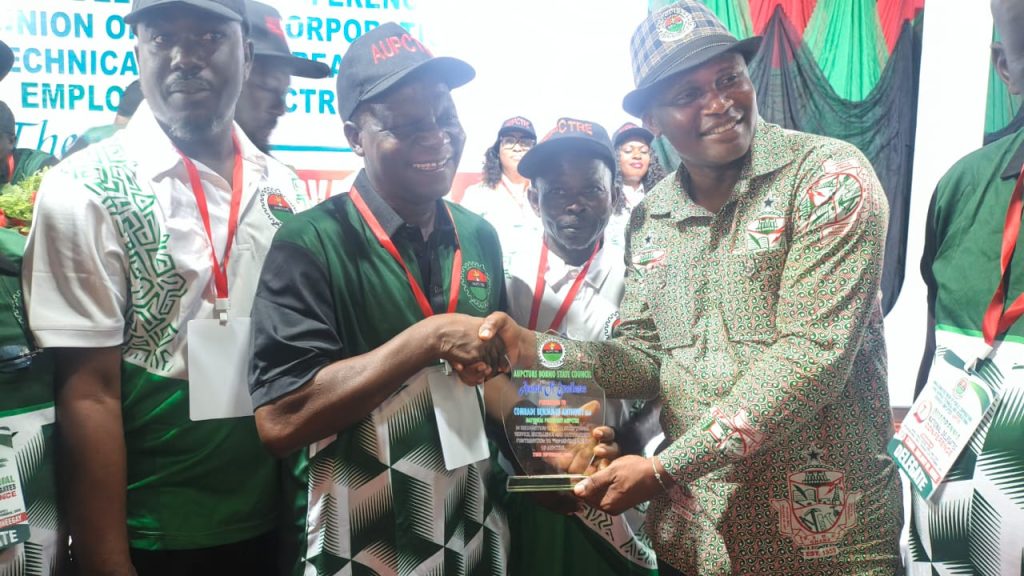
According to the reports, Benjamin’s administration engaged the new CAC Registrar-General, Hussaini Magaji, in negotiations that eventually led to the resolution of outstanding disciplinary cases, reversal of what the union regarded as unjustified promotion stagnation and the restoration of industrial harmony.
The reports also highlighted developments in Anambra State, where Benjamin’s administration secured an out-of-court settlement in a 14-year dispute concerning the dissolution of the Anambra State Water Corporation and the State Environmental Protection Agency.
The settlement was reported to have saved the state ₦1.3 billion and created an opportunity for the re-engagement of disengaged workers.
Another dispute highlighted in the reports involved the Standards Organisation of Nigeria (SON). Benjamin’s intervention was credited by the reports with helping to restore industrial peace, after which Benjamin and members of his executive were reportedly decorated as Ambassadors of SON.
EMPHASIS ON WORKERS’ EDUCATION AND PUBLIC-SERVICE ADVOCACY
Workers’ education was also identified as an important component of Benjamin’s administration.
The reports said his tenure placed emphasis on continuous training, gender mainstreaming and the provision of educational materials across the union’s structures.
Benjamin was also reported to have been active in campaigns concerning the management and provision of public water services. Working with civil-society organisations, including Environmental Rights Action/Friends of the Earth Nigeria (ERA/FoEN), he opposed water privatisation and advocated for Public-Public Partnerships (PuPs) as an alternative to Public-Private Partnerships in the management of public water services.
BENJAMIN’S UNION CAREER
Benjamin’s leadership history within the labour movement spans several positions.
He served as Secretary, Administration of the FCT Council in 2004, later became National Secretary Finance, and subsequently served as FCT Council Chairman from 2013 to 2017.
He became AUPCTRE National President in 2017 and served in that capacity until 2026. During the same broader period, he also served as National Vice President of the Nigeria Labour Congress (NLC).
PEACEFUL TRANSITION
The conclusion of the Kano conference therefore represents both a change in the leadership of AUPCTRE and the beginning of a new phase for the union.
The Labour Ministry’s representative at the election commended the delegates for conducting themselves peacefully and orderly, while the reports surrounding the conference described the transition as transparent and without disruption.
For the incoming administration led by Eugene Manji, the immediate environment includes issues already raised at the conference, particularly workers’ purchasing power, wage concerns, industrial relations and the broader defense of workers’ interests.
Manji, in accepting the mandate of the delegates, said the new administration was ready to move from electioneering to service and to reposition AUPCTRE for greater effectiveness.
The Kano conference thus closed one eight-year chapter under Benjamin Benjamin and opened another under Eugene Manji, with the new leadership assuming responsibility for steering the union through its next four-year term.